A garage door is easy to underestimate until the weather turns ugly. Homeowners often think first about roof sheets, gutters, windows, and loose furniture in the yard. The garage tends to sit lower on the mental list, partly because it feels solid, partly because it is used so routinely that it fades into the background. That is a mistake. When severe storms or cyclones hit, the garage opening becomes one of the most important parts of the building envelope.
Queensland guidance treats this seriously, and for good reason. If a garage door fails, wind can enter the house and increase pressure inside. That can contribute to more serious damage to walls and roofing. In practical terms, a weak or poorly rated door can become the point where a manageable storm loss turns into a major structural event. The garage is not just a storage space or parking bay. In many homes, especially attached garages, it is a large opening connected directly to the rest of the structure.
That is why garage readiness before storm season deserves more than a quick glance at the remote and a hope for the best. It calls for an honest look at the condition of the door, the reliability of the opener, the state of the hardware, and whether the opening itself is appropriate for the local wind risk.
The garage door is a storm issue, not just a convenience issue
Many property owners contact a technician because the door is noisy, slow, or occasionally sticks. Those are real maintenance issues, but before severe weather they also become warning signs. A door that runs poorly under normal conditions may not cope well under stress. Binding rollers, bent garage door tracks, worn hinges, or uneven movement can all indicate that the door is already under strain.
The opener matters too, though perhaps not in the way people assume. A garage door opener does not make a weak door strong. It does not compensate for poor wind rating, damaged panels, or a compromised frame. What it does do is affect whether the door can be closed reliably when a storm approaches and whether the household can secure or release the system safely if power conditions change.
I have seen garages where the opener worked well enough for months, right up until the evening heavy weather warnings came through. Then the owner discovered the door would reverse halfway down, or the remote was intermittent, or the manual release jammed because no one had touched it in years. Those are the kinds of problems that feel minor on a dry afternoon and urgent when rain bands are already moving in.
What official storm guidance means for garage doors
Queensland emergency and housing guidance is clear on a few points that matter directly here. Homeowners are advised to prepare before storm season, secure loose outdoor items, park vehicles under shelter if possible, and go outside only when it is officially safe after the event. For garage planning, that means the hard work should happen early. Waiting until the wind picks up is exactly the wrong moment to start inspecting fasteners, testing the opener, or searching for bracing components.
For cyclone preparation specifically, guidance says a garage door should comply with AS/NZS 4505 and be correctly rated for wind pressure, or have a bracing system that can be installed before a cyclone. That tells you two things. First, not every garage door is suitable for every exposure level. Second, a storm-ready setup is not only about the leaf of the door itself. It may involve a separate bracing system, and that system needs to be available, understood, and ready to fit ahead of time.
Queensland resilience material also notes that replacing existing garage doors and frames with wind-rated versions can be part of household resilience work. That is an important point because many older doors still operate perfectly well day to day. Smooth operation is not the same as storm suitability. A tidy older door may still be a non-compliant weak point if it lacks the required wind performance for the home’s location and risk profile.
Why garage door openers deserve their own check
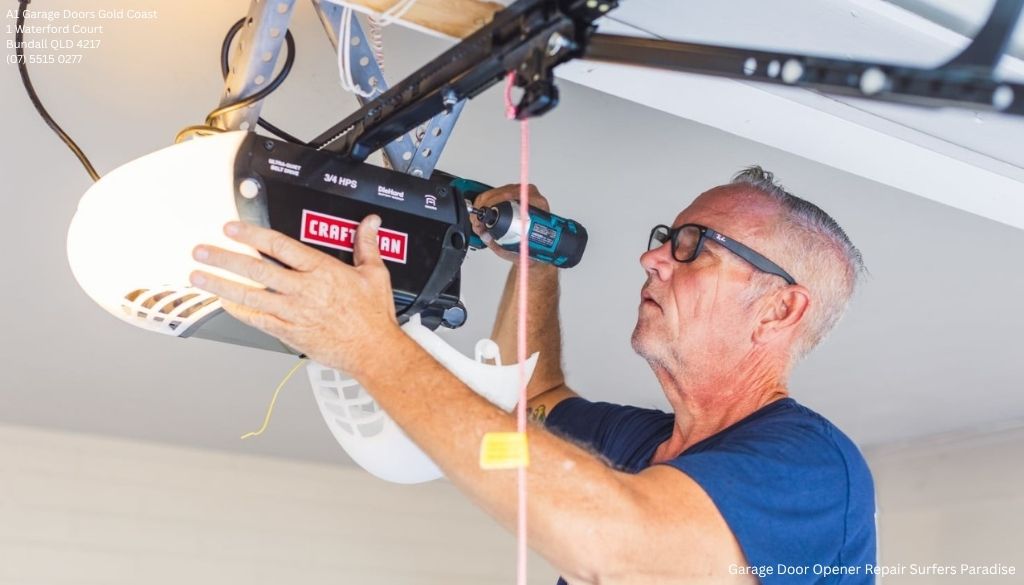
The opener is a mechanical and electrical device that gets ignored until it fails. Before storm season, it is worth treating it as essential equipment. If your household relies on the garage for vehicle access, storage access, or the most convenient route into the house, the opener should be checked when conditions are calm.
A practical inspection is not glamorous. You are looking for ordinary signs that the system is becoming unreliable. Does the door close fully without hesitation. Does it open and close at a consistent speed. Does the motor sound strained. Do wall controls and remotes respond properly. If the power goes out, can the door be disengaged and moved safely, assuming the door itself is otherwise in proper condition.
The key is not to drift into amateur repairs that belong in a trained technician’s hands. A homeowner can observe and test basic operation. That is sensible. But if the opener behaves unpredictably, if the force settings seem wrong, or if the door is clearly not balanced, that is where qualified service becomes the safer call. Severe weather preparation is not the time for guesswork.
There is another angle that gets overlooked. Queensland advice includes unplugging electrical items as part of storm preparation. For garages, that can be relevant to opener accessories, charging equipment, and small appliances stored near the door. Each home is different, but the larger principle is straightforward: reduce avoidable electrical exposure and know how your access points will function if the power supply becomes unreliable.
The hidden importance of balance, springs, and track condition
A garage door is only as dependable as the system supporting it. Homeowners often focus on panels and forget that the actual garage door resource lifting and guiding work is done by a group of parts working together. Garage door springs counterbalance the door’s weight. Tracks guide travel. Rollers, hinges, and brackets distribute movement and load. When one part is off, the whole system becomes less predictable.
This matters before storms because you want the door to close decisively and stay where it belongs. A door that slams, drifts, shudders, or racks sideways is not telling a subtle story. It is signalling wear, damage, or imbalance. In my experience, a lot of avoidable emergency service calls begin with the sentence, “It was a bit rough for a while, but it still worked.” Storm prep is the moment to stop accepting “still works” as the standard.
Garage door springs deserve special respect. They are high-tension components and not suitable for casual adjustment. If a spring is worn or failing, the opener may appear to be the problem when the real issue is poor counterbalance. Likewise, garage door tracks can look only slightly bent to the untrained eye, yet even a small distortion can affect how the door seats and moves. Before severe weather, those details become more than maintenance concerns. They affect whether the opening can be secured properly.
When a repair is enough, and when garage door replacement is the smarter choice
Not every storm-readiness problem requires a new door. Sometimes a professional service, a component replacement, or a correction to alignment is all that is needed. But there are cases where garage door replacement is the better long-term decision, especially when resilience is part of the goal.
The first case is when the existing door and frame are not suitable for the relevant wind conditions. Queensland guidance specifically points to replacing non-compliant doors and frames with wind-rated versions as a way to improve resilience. If the opening is a known weak point, spending money on small recurring repairs may not be the best use of funds.
The second case is cumulative wear. A door that has aging panels, tired hardware, opener issues, and uncertain compliance can become a false economy. You keep patching one item while the larger risk remains. The third case is when a bracing system is required but missing, incomplete, or not practical for the household to install correctly ahead of a cyclone. Preparation systems must be realistic. If a family is unlikely to use them properly under pressure, that deserves a frank conversation with a qualified contractor about alternatives.
A replacement decision also offers a chance to improve everyday performance. While storm resilience is the priority, many attached garages also benefit from better sealing and draught control. Australian energy guidance notes that draught stoppers at the base of doors can reduce heat loss. That does not turn a garage door into a storm device by itself, but it does mean a well-planned upgrade can improve comfort, energy performance, and weather resistance in one project.
A practical pre-storm garage check
A short, disciplined check before storm season is more valuable than a rushed, anxious inspection when warnings are already active. Focus on what you can verify safely and what needs professional follow-up.
- Run the garage door openers through a full open and close cycle, listening for strain, hesitation, or unusual noise. Look at the door’s travel path and the garage door tracks for obvious damage, binding, or misalignment. Confirm the door closes fully and sits properly at the floor and frame. Make sure vehicles can be parked under shelter if needed, without relying on last-minute clearing of the garage. Identify whether the door is wind-rated for the property’s needs, or whether a bracing system is required and ready before cyclone conditions.
That list is intentionally simple. It is not a substitute for technical assessment. It is a way to catch the common problems that homeowners often miss until weather pressure exposes them.
Storage habits inside the garage can make storm preparation easier or harder
A garage can be a safe shelter for vehicles and equipment, or it can be a crowded obstacle course that prevents timely action. Severe weather guidance advises https://goldcoastgaragedoorrepair.com.au/southport-qld/ securing loose outdoor items. The garage often becomes the natural destination for those items, but only if there is actual room to bring them inside.
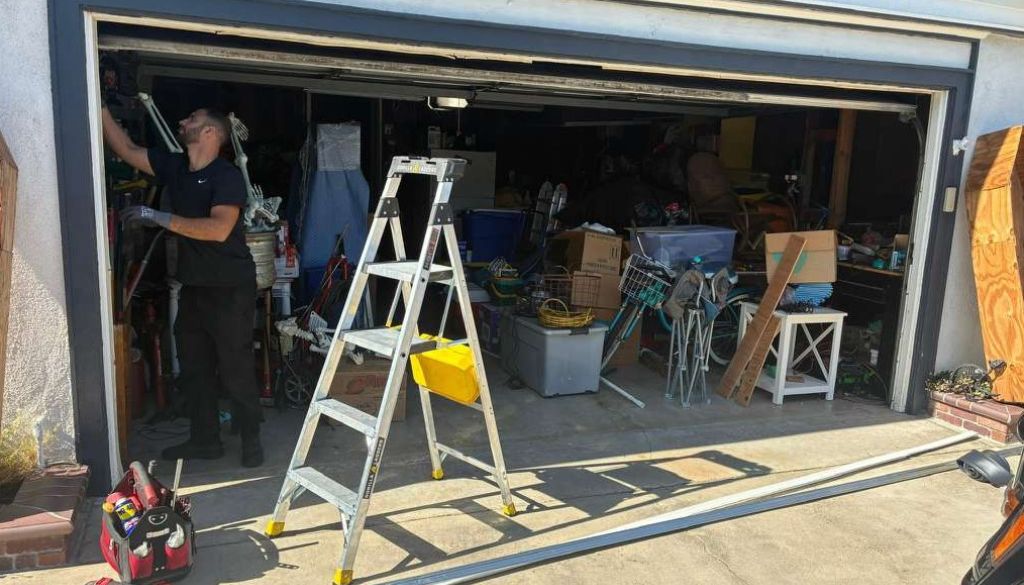
I have walked into plenty of garages where the opener was fine and the door itself was serviceable, yet the space was so cluttered that a car could not be brought in quickly. Garden tools, stacked boxes, spare timber, old appliances, and half-finished projects had taken over. In calm weather, that is an annoyance. In a storm warning, it is a vulnerability.
The better approach is to treat the garage as part of the emergency plan, not just overflow storage. Leave enough space to shelter a vehicle if possible. Keep access to controls and manual release points clear. Avoid stacking items against the door or track area. If you use removable bracing for cyclone preparation, store it where it can be reached quickly and fitted according to the manufacturer’s instructions. Readiness depends as much on layout and access as it does on hardware.
The safety line that homeowners should not cross
There is a strong temptation to do everything yourself before storm season. Some tasks are sensible for an owner. Others are not. Queensland resilience guidance recommends working safely and using a qualified contractor for securing vulnerable parts of the home where appropriate. Garage doors fall squarely into that common-sense boundary.
A homeowner can inspect visible condition, clear the garage, test normal operation, and confirm that preparation materials are on hand. But when the issue involves garage door springs, structural fixing, opener settings, wind rating, or the need to replace the door and frame, the work should move to a qualified professional. The risks are both mechanical and structural. A garage door system can injure someone during an improper repair, and a poor storm upgrade can create false confidence without delivering real resilience.
That distinction matters because severe weather preparation often creates urgency, and urgency leads people to take shortcuts. The better pattern is to schedule service before storm season and ask direct questions. Is this door suitable for local wind conditions. Does it comply with the relevant standard. If not, what are the realistic options. Is there a bracing system. Can the household install it correctly when required. Are the frame and fixings part of the issue, not just the door leaf.
Older homes and attached garages deserve extra scrutiny
Attached garages create a specific concern because they connect a large door opening to the main structure. If that opening is compromised during a severe storm, the effects can spread beyond the garage. That is why official guidance puts so much emphasis on garage-door integrity.
Older homes can present a mixed picture. Sometimes the door has already been upgraded, but the frame details or surrounding opening have not. Sometimes the opener has been replaced while the original door remains. Sometimes everything operates smoothly, which encourages complacency, even though the setup may not align with current resilience expectations. None of this means an older garage is automatically unsafe. It means assumptions are risky.
One of the most useful conversations a homeowner can have is with a contractor who understands not just routine service but storm resilience. The question is not simply, “Can you make this door work better?” It is, “Will this opening perform as it should when severe weather arrives?” Those are related questions, but they are not identical.
Signs that point toward professional attention soon
Not every problem announces itself dramatically. More often, the warning signs are ordinary and easy to dismiss, especially if the door still cycles.
- The opener struggles, reverses unexpectedly, or only works intermittently. The door looks uneven in motion or makes contact awkwardly with the opening. Garage door tracks show visible bends, looseness, or impact damage. Garage door springs appear worn, the door feels unusually heavy, or operation has changed noticeably. You do not know whether the door is wind-rated, compliant, or dependent on a separate bracing setup.
Each of those signs deserves follow-up before storm conditions develop. Waiting until a cyclone watch or severe storm warning is active narrows your options and adds pressure to every decision.
Small improvements that support daily use and storm readiness
Storm preparation often gets framed as a once-a-year task, but the best results usually come from steady upkeep. If the door closes properly every day, if the opener is serviced when needed, if the garage remains functional rather than overfilled, and if the household understands how to secure the opening, then severe weather preparation becomes much less frantic.
There is also value in attending to details that help the home year-round. Good sealing at the bottom edge can help reduce draughts in attached garages. Keeping electrical items organised and protected makes it easier to unplug what should be unplugged before storms. A clean, accessible garage makes it more realistic to park under shelter when official advice calls for it. These are not dramatic upgrades, but they tend to be the measures people appreciate most when a warning arrives and they can act calmly instead of scrambling.
The larger lesson is simple. Garage readiness is not about one product and not about one afternoon. It is about recognising that the garage door is a major opening in the house, one that deserves the same level of attention as roofing, windows, and external doors. Garage door openers play a part. Garage door springs, garage door tracks, and the overall condition of the system play a part. Sometimes garage door replacement is the correct step, especially where wind rating and compliance are the real issues.
Severe storms test the parts of a home that people take for granted. A garage door is often one of them. Preparing it early, checking it honestly, and upgrading it where needed is not overcautious. It is one of the most practical ways to reduce avoidable risk before the weather has the final say.